

Zinc is one of the most important micronutrients for normal human physiology. It stimulates the pancreas, prostate, and thymus glands, participates in the metabolism of proteins, fats, and carbohydrates, and is involved in the activity of over 300 enzymes. It is the second most abundant trace element in the body after iron, present in every cell — and yet zinc deficiency is common, affecting a significant proportion of the global population, partly because it is found in relatively few widely consumed foods and is not efficiently retained by the body.
What Does Zinc Do in the Body?
Zinc's biological roles span several broad categories. It is essential for immune function — supporting the development and activity of T-cells, neutrophils, and natural killer cells, and maintaining the integrity of epithelial barriers against pathogens. It contributes to normal wound healing through its role in collagen synthesis and cell division. It is necessary for the normal sense of taste and smell, for DNA synthesis and cell replication, and for normal protein synthesis throughout the body.
Zinc also plays a direct role in hormonal regulation: it is required for the synthesis of insulin in the pancreas, for thyroid hormone production (which is why zinc and selenium together are particularly important for thyroid health), and for the synthesis of reproductive hormones — making it relevant for both male fertility (sperm production and testosterone regulation) and female reproductive health. It contributes to cognitive function and mood regulation, and helps maintain the health of skin, hair, and nails. Our zinc supplements collection covers a full range of forms and dosages.
Signs of Zinc Deficiency
Because zinc is involved in so many processes, deficiency produces a wide range of non-specific symptoms that are easy to attribute to other causes. The most recognisable include:
- Frequent infections — increased susceptibility to colds, respiratory infections, and other illnesses due to impaired immune function
- Slow wound healing — cuts, skin irritations, and minor injuries that take longer than expected to resolve
- Hair loss — particularly diffuse thinning rather than patchy loss
- Brittle nails — including white spots on nails (leukonychia), which can indicate deficiency
- Skin problems — acne, dry skin, and increased susceptibility to inflammation
- Loss of taste and smell — including taste disturbances such as metallic taste or heightened sensitivity
- Poor appetite and fatigue — low energy and reduced interest in eating
- Difficulty concentrating and, in more prolonged deficiency, impaired cognitive performance
Deficiency can also contribute to eye health concerns including increased risk of age-related macular degeneration, since zinc is found in high concentrations in the retina and plays a role in vitamin A metabolism in the eye.
Who Is at Risk of Zinc Deficiency?
Zinc absorption from plant foods is substantially lower than from animal sources, because phytates — compounds present in grains, legumes, and seeds — bind zinc and inhibit its absorption in the gut. This makes certain dietary patterns and lifestyles particularly prone to insufficiency:
- Vegetarians and vegans — the absence of red meat (the most bioavailable zinc source) and reliance on phytate-rich plant foods significantly reduces effective zinc intake
- Athletes — zinc is lost through sweat and has elevated requirements due to its role in muscle protein synthesis and immune recovery
- People with digestive disorders — coeliac disease, Crohn's disease, and chronic diarrhoea impair zinc absorption and increase losses
- Alcohol consumers — alcohol reduces zinc absorption and increases urinary zinc excretion
- Older adults — both dietary intake and absorption tend to decrease with age
- Pregnant and breastfeeding women — requirements are elevated; zinc supplementation during pregnancy may reduce obstetric complications risk
Food Sources of Zinc
The richest dietary sources of zinc are predominantly animal-derived, where zinc is bound in more bioavailable forms:
- Oysters and shellfish — by far the most concentrated dietary source, providing 10–80 mg per 100g depending on the species
- Red meat — beef and lamb are excellent sources; pork and veal liver also provide significant amounts
- Poultry — particularly dark meat
- Dairy products — cheese and milk provide moderate amounts in a well-absorbed form
- Eggs — particularly the yolk
Plant sources include pumpkin seeds, hemp seeds, legumes (white beans, lentils, chickpeas), whole grains, and dark chocolate — but absorption from these is consistently lower due to phytate content. Soaking and fermenting legumes and grains can reduce phytate content and improve zinc bioavailability from plant foods.
Zinc and Selenium: A Relevant Combination
Zinc and selenium are frequently combined in supplements because their functions are complementary and interdependent. Both are concentrated in the thyroid gland, where they are required for thyroid hormone synthesis and the activity of selenoenzymes that protect the thyroid from oxidative damage. A deficiency of one can impair the functioning of the other, and both are commonly insufficient in modern diets that lack adequate seafood, organ meat, and Brazil nuts. For people specifically concerned about thyroid health, immune resilience, or reproductive health, a combined zinc-selenium formulation is a practical approach. Our selenium supplements include both standalone and combined options. For broader mineral support, our minerals collection covers the full range of essential dietary minerals.
Supplement Forms: Which Type of Zinc Is Best Absorbed?
Zinc supplements are available in several chemical forms with different bioavailability profiles:
- Zinc picolinate — picolinic acid forms a chelate with zinc that some research suggests improves absorption compared to oxide and sulfate; widely used in quality supplements
- Zinc glycinate / zinc bisglycinate — amino acid chelated forms with good bioavailability and gentle gastrointestinal tolerability
- Zinc citrate — well-absorbed and less likely to cause stomach upset than zinc sulfate or oxide
- Zinc gluconate — a common and reasonably well-absorbed form; frequently used in lozenges for cold symptom management
- Zinc orotate — claimed good cellular uptake, though evidence base is smaller
- Zinc oxide and zinc sulfate — lower bioavailability and more likely to cause digestive discomfort; less favoured in quality supplements despite low cost
Zinc is best absorbed when taken on an empty stomach, but this can cause nausea in sensitive individuals — taking it with a small amount of food reduces this effect while slightly reducing absorption. It should not be taken at the same time as iron or calcium supplements, which compete for absorption.


Aliness
Aliness Chelated Zinc Diglycinate 15 mg - 100 Tablets
Regular price €7.69Unit price€0.08 each

 10% off
Jarrow Formulas
Jarrow Formulas Zinc Balance - 100 Veg Capsules
Sale price €14.12 Regular price €15.69Unit price€0.14 each


Vitaler's
Vitaler's Zinc 15 mg + Selenium 200 mcg - 120 Capsules
Regular price €6.79Unit price€0.06 each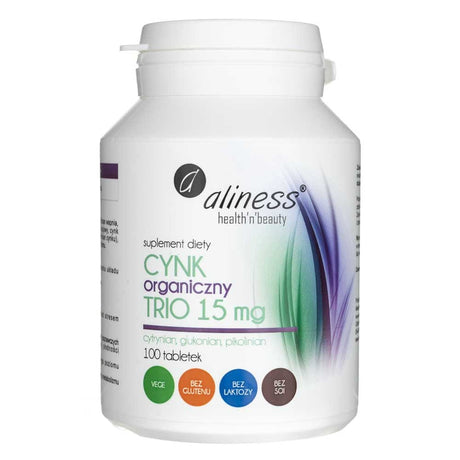


Dosage and Safety
The EU recommended daily intake for zinc is 10–11 mg for adult women and 10–16 mg for adult men, with higher requirements during pregnancy and breastfeeding. Most zinc supplements are dosed between 10 and 50 mg per serving. Standard supplemental doses (15–25 mg/day) are appropriate for general deficiency prevention and immune support. Higher doses (40–50 mg/day) should be used short-term or under guidance.
There is an important interaction to be aware of: sustained high-dose zinc supplementation depletes copper, because the two minerals compete for the same absorption transporters. Long-term use of zinc above approximately 40 mg/day can cause copper deficiency, with neurological consequences. Products that combine zinc with a small amount of copper — or cycling supplementation — address this. Short-term supplementation at standard doses does not carry this risk for most people. Explore our immune system collection for zinc alongside other immune-supporting nutrients.
This article is for information only and does not replace medical advice. If you have health concerns, are pregnant, breastfeeding or taking medication, consult a doctor or pharmacist. Dietary supplements are not a substitute for a varied diet.


